The science behind vein colour and what it truly indicates for your legs.
Look at your wrist, and the veins may appear green or blue. However, if you sustain a paper cut, the blood is undoubtedly red. So, which is correct?
Your blood is always red. Oxygen-rich blood in arteries is bright red, while blood returning through veins is a deeper maroon. The green hue you perceive is not blood at all; it is an optical illusion created by light interacting with your skin.
Red light penetrates deeper into the skin, where blood within a vein absorbs much of it, resulting in less red light bouncing back from that area. Conversely, blue and green light are scattered back by the upper layers of skin. Your brain compares that area with the warmer skin surrounding it, interpreting it as a cooler colour.
Skin tone plays a significant role in the final appearance. On wheatish and olive skin tones, which are common in India, natural yellow undertones can cause that cool shade to appear more green. On fairer skin, veins tend to look blue or purple.
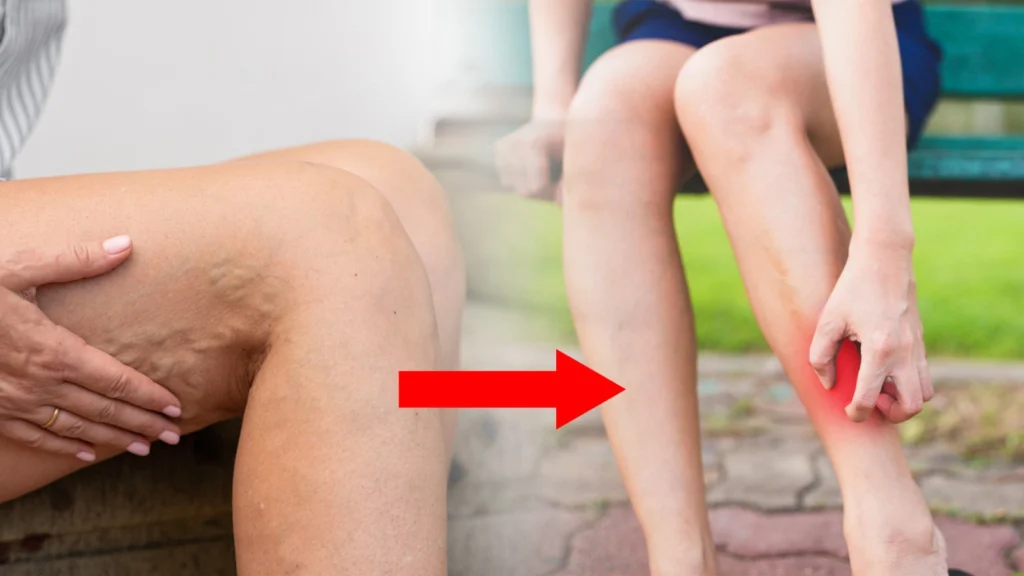
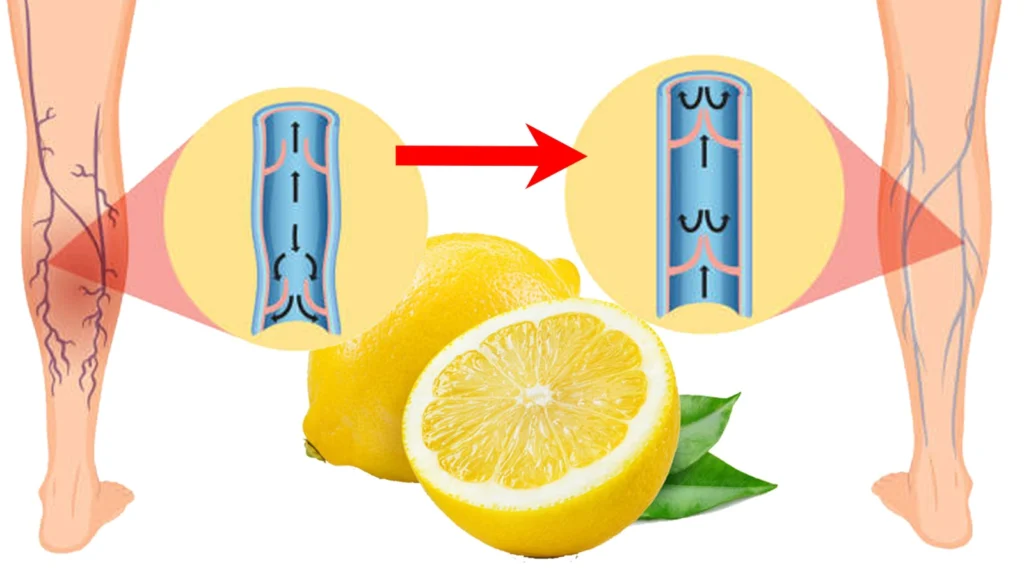
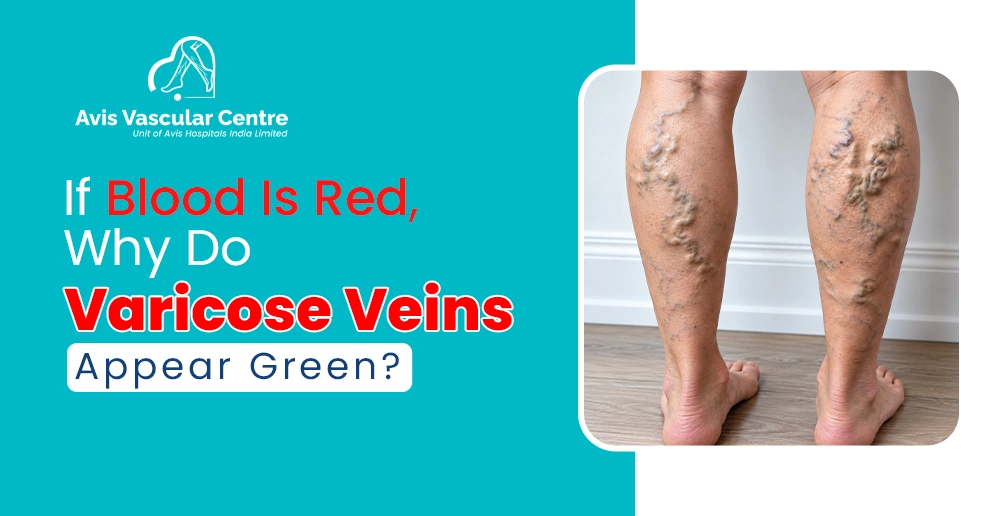
Healthy veins contain tiny one-way valves that help push blood towards the heart. In varicose veins, these valves weaken, causing blood to flow backward, pool, and stretch the vein until it twists and bulges towards the surface. A wider, shallower vein accommodates more blood and absorbs more light, making it appear darker, greener, and rope-like. The colour remains an illusion; it is the vein structure beneath that has changed.
Not every visible vein conveys the same message. A faint, flat green line on your wrist indicates a healthy vein located deeper under the skin. Fine red or purple webs on the thighs, known as spider veins, are situated right at the surface and are often cosmetic in nature, though they can signal rising pressure within the leg’s veins. Varicose veins differ: they are generally wider than approximately 3 mm, raised, twisted, and rope-like, indicating leaking valves and blood pooling. Their colour can also be misleading; a concerning vein may appear pale on darker skin, while a benign one can look prominent on fair skin. Therefore, colour should be regarded as a clue to observe, not a definitive diagnosis.
• Brown staining around the ankles: this indicates long-term pooled blood affecting the skin.
• A red, hard, tender vein: this may suggest inflammation or a clot in a surface vein.
• Sudden swelling or pain in one leg: this could indicate deep vein thrombosis (DVT). Seek immediate care.
Current European and US vascular guidelines recommend minimally invasive endovenous treatments over traditional vein-stripping surgery. Laser and radiofrequency ablation techniques seal the faulty vein from within through a single needle puncture.
Additionally, newer non-thermal options, such as medical glue closure, are suitable for selected patients. Most individuals can walk in and out on the same day. Each treatment plan begins with a Colour Doppler screening that identifies precisely which valves are failing.
“A vein’s colour tells us very little. What truly matters is whether its valves are leaking. We never assess varicose veins by appearance alone; a Colour Doppler scan reveals the real picture in minutes.” - Vascular Specialist, Avis Vascular Centre.
 +91 72079 48545
Green veins are merely an optical illusion, but bulging veins signal issues with valve function. At Avis Vascular Centre, our vascular specialists examine the underlying factors with Colour Doppler imaging and provide minimally invasive treatments tailored to your needs, allowing you to resume your routine swiftly with lighter, healthier legs.
Noticing green, bulging veins on your legs? A Colour Doppler screening at Avis Vascular Centre can help you understand what is happening beneath the surface.

No. Blood is always red; only its shade varies, from bright red in arteries to deep maroon in veins.
Not necessarily. Colour depends on various factors, including depth, width, and skin tone. The severity can only be accurately assessed through a scan.
Not at all. It is a quick, painless, non-invasive ultrasound that involves no radiation.