

Leg ulcers often result from chronic venous insufficiency and prolonged high venous pressure, leading to slow-healing open wounds on the lower legs. Effective leg ulcer management focuses on both healing the wound and addressing the root cause. Wound care for leg ulcers involves careful cleansing, debridement, and sterile dressing to prevent infection and promote tissue repair. The treatment for leg ulcers typically includes compression therapy to improve circulation and reduce swelling.
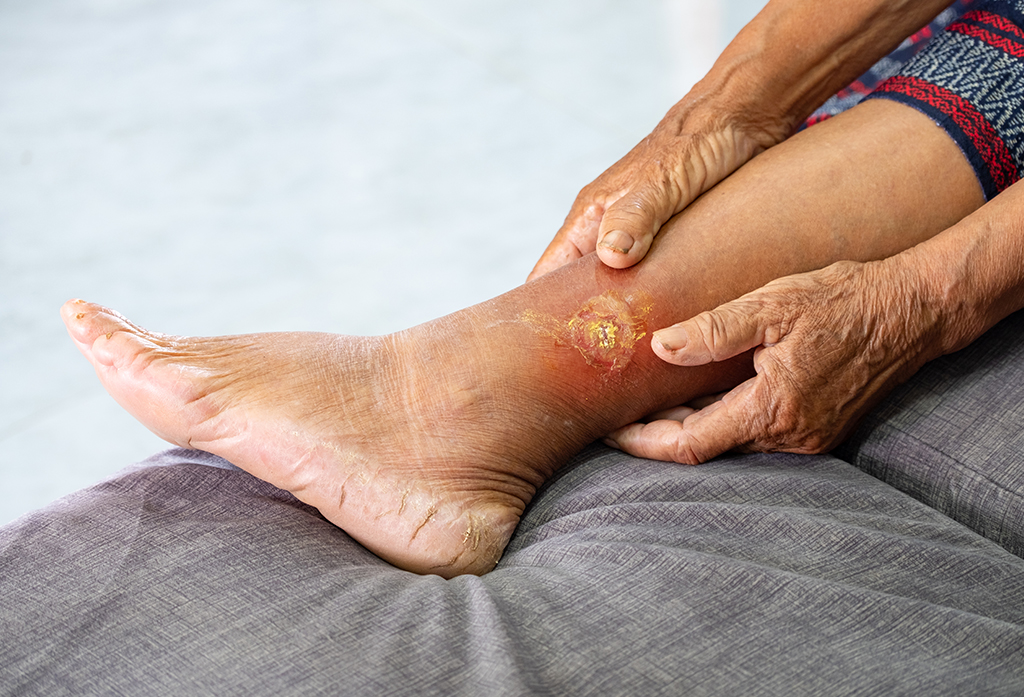
Depending on the underlying cause, specialized approaches such as venous leg ulcer treatment, arterial leg ulcer treatment, or diabetic leg ulcer treatment may be required. Alongside medical care, lifestyle measures like leg elevation, regular exercise, and maintaining healthy blood sugar levels aid the leg ulcer healing process. For complex or chronic leg ulcer management, advanced therapies like skin grafting or hyperbaric oxygen therapy may be recommended to accelerate recovery and prevent recurrence.
Before: Examining the ulcer, identifying the cause and tests like doppler ultrasound are performed.
During: The ulcer is cleaned gently, the dead or infected tissue is removed, appropriate dressing is applied to maintain a moist and protected environment. Bandages are used to promote blood circulation.
After: Leg elevation, gentle exercise and a healthy diet are advised, must avoid prolonged sitting or standing. Vein surgery, skin grafts or hyperbaric oxygen therapy are done for non-healing ulcers.
“These are some of the common concerns raised by patients, we encourage you to review them for better clarity and understanding”
.png)
The most effective treatment involves improving circulation through compression therapy, wound care, and addressing the underlying cause such as varicose veins or diabetes.
Leg ulcers may not heal due to poor blood flow, infection, uncontrolled diabetes, or inadequate wound care.
Venous ulcers result from poor vein circulation and usually appear above the ankle, while diabetic ulcers occur due to nerve and blood vessel damage, often on the feet.
You should see a doctor if your ulcer doesn’t heal within two weeks, becomes painful, swollen, or shows signs of infection.