
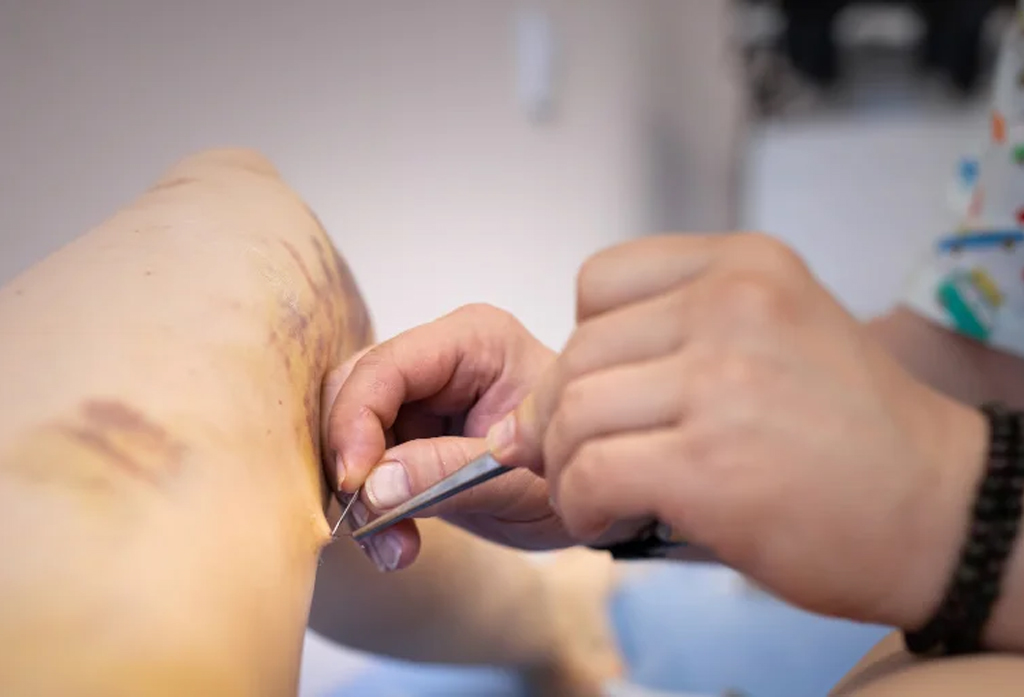
Stab Phlebectomy, also known as Ambulatory Phlebectomy or Micro Phlebectomy, is a minimally invasive vein removal technique used to treat superficial varicose veins with precision and minimal discomfort. During the phlebectomy procedure, local anesthesia is applied to numb the area completely. The doctor then makes a series of micro-incisions along the vein’s path and uses a fine hook to gently extract the diseased segments of the vein, a method referred to as micro-incision vein removal.
Since the punctures are tiny, stitches are not required, and the skin heals naturally with almost no visible scarring. Performed as an outpatient stab phlebectomy treatment, patients can walk immediately after the procedure and typically resume normal activities within a day or two. Stab phlebectomy for varicose veins not only delivers excellent cosmetic outcomes but also provides lasting relief from symptoms such as leg pain, swelling, and heaviness.
Before: The doctor examines and marks the varicose veins, a local anesthetic is administered to numb the skin and surrounding tissues for comfort.
During: Tiny punctures (2-3mm) are made along the marked veins, a small phlebectomy hook is used to gently remove the sections of varicose veins through the punctures. Small dressing or adhesive strips are applied, followed by a compression bandage or stocking to support healing.
After: Patients can walk soon after the procedure, they can experience minimal discomfort and usually return to daily activities within 24-48 hours. Follow-up visits will definitely ensure proper healing and long-term results.
“These are some of the common concerns raised by patients, we encourage you to review them for better clarity and understanding”
.png)
Stab phlebectomy is a minimally invasive procedure used to remove varicose veins through tiny skin punctures.
Both are effective, phlebectomy removes visible surface veins, while laser treats deeper vein reflux; doctors often combine them for results.
Recovery is quick, most patients return to normal activities within 1 to 2 days.
It removes the targeted surface veins, but additional treatments may be needed for deeper or feeder veins.