

Radiofrequency Ablation (RFA) is an advanced, minimally invasive vein treatment used to manage varicose veins effectively without the need for open surgery. During radiofrequency ablation for varicose veins, a thin catheter is inserted into the affected vein, and gentle heat energy is delivered along its inner wall to seal it closed. This radiofrequency thermal ablation technique reroutes blood flow to healthy veins, relieving symptoms such as swelling, leg pain, and heaviness while improving overall circulation.
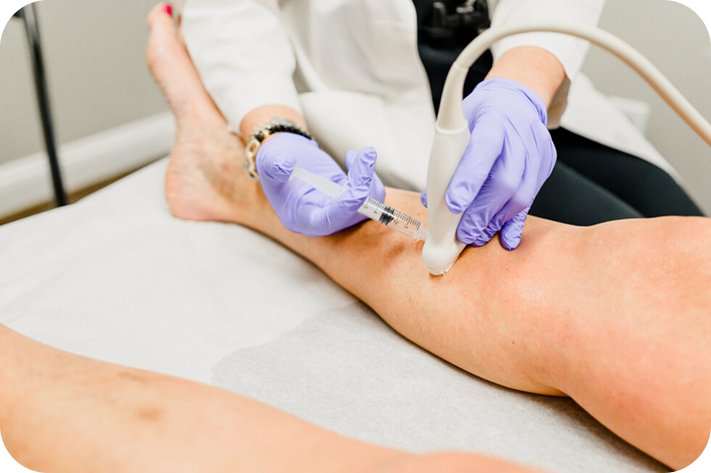
Performed under local anesthesia, the radiofrequency ablation procedure requires no large incisions or stitches and involves minimal discomfort. Patients can usually walk immediately after the treatment and resume daily activities within one or two days. With minimal bruising and a very low risk of complications, thermal radiofrequency ablation is considered one of the most effective options for RFA vein treatment and remains a preferred RFA treatment for venous insufficiency in modern vascular care.
Before: Clinical exam and duplex ultrasound to map diseased veins and plan the access site.
During: A small needle puncture is made, usually near the knee or ankle; a sheath and RF catheter are advanced into the target vein under ultrasound. Tumescent local anesthetic is injected along the vein to provide numbness and protect surrounding tissues. The catheter is activated and slowly withdrawn, delivering heat in segments to close the vein.
After: Compression bandage or stocking is applied immediately. Patients are encouraged to walk soon after the procedure; most resume routine work within 1 - 2 days.
“These are some of the common concerns raised by patients, we encourage you to review them for better clarity and understanding”
.png)
Radiofrequency ablation (RFA) is a minimally invasive procedure that uses heat energy to close damaged veins and restore healthy blood flow.
No, the procedure is virtually painless, local anesthesia is used, and most patients feel only mild warmth or pressure.
Results are long-lasting, as the treated veins are permanently sealed and symptoms rarely recur.
Both are highly effective; the choice depends on your vein type and your doctor’s recommendation.