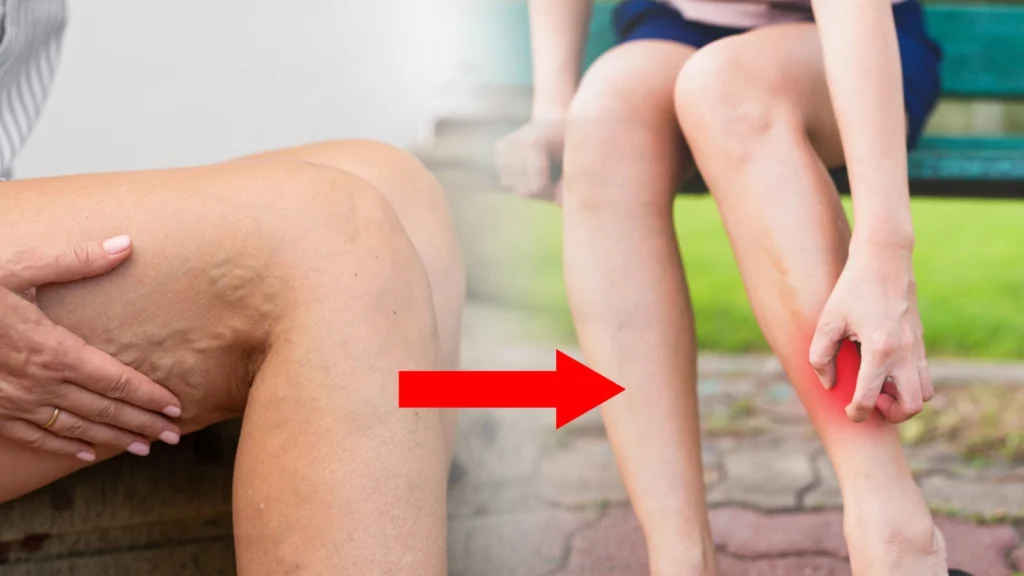
Living with varicose veins often feels like a heavy burden - literally. You might notice a dull ache at the end of a long shift, or perhaps you’ve become self-conscious about the twisted, purple lines tracing your calves. These aren't just cosmetic marks; they are clear indicators from your body that your circulatory system needs support.
While many people worry about invasive procedures, the truth is that the best exercises for varicose veins can often manage the condition, reduce discomfort, and delay the need for clinical intervention at a hospital. In this guide, we explore how movement acts as medicine, how to identify worsening symptoms, and when it is time to seek professional care for laser treatment.


 18-october-2025
category: varicose veins
18-october-2025
category: varicose veins
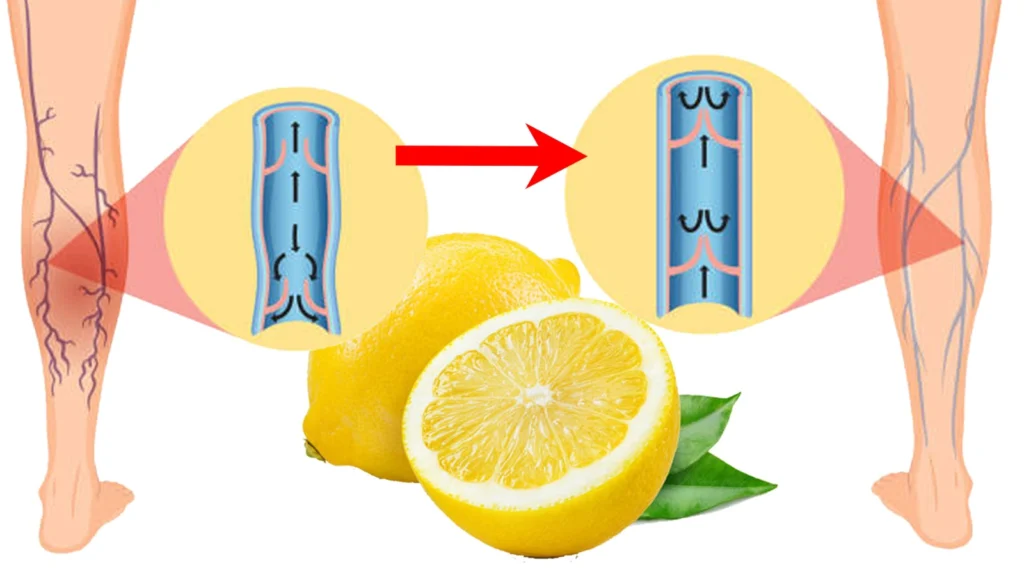
To understand why specific movements help, we first have to look at the "plumbing" of the human body. Your veins have the monumental task of fighting gravity to move blood from your toes back up to your heart. To do this, they rely on tiny, one-way valves.
When these valves weaken or fail, blood begins to flow backward and pool in the lower legs. This creates pressure, causing the veins to stretch and bulge. This condition, known as venous insufficiency, is the root cause of the visible changes and physical discomfort you feel daily. If left unmanaged, these can escalate from minor annoyances into severe varicose veins symptoms that require a visit to the hospital.
Before starting any new physical routine, it is vital to "check in" with your legs. Varicose veins symptoms can range from mild to severe, and identifying where you fall on the spectrum helps determine your exercise intensity.
Aching and Heaviness: A persistent "weighted" feeling in the legs, especially after standing.
Swelling (Edema): Tightness around the ankles or "sock marks" that don't go away quickly.
Muscle Cramping: Sudden, sharp "charley horses," particularly at night.
Skin Changes: Itching (pruritus) around the veins or a change in skin color to a brownish or leathery hue.
Throbbing or Burning: A localized sensation of heat around the affected area.
If these varicose veins symptoms are accompanied by skin ulcers or spontaneous bleeding, you should skip the home remedies and head directly to a hospital for a vascular consultation regarding laser treatment.
Medical professionals often refer to the calf muscles as the "peripheral heart" or "second heart." When you walk or flex your feet, these muscles contract and squeeze the deep veins, physically "milking" the blood upward. Without this muscle contraction, blood remains stagnant, increasing the pressure on your vein walls. By performing the best exercises for varicose veins, you are essentially manually operating your circulatory pump.
This increased water retention can cause more fluids to precipitate in the blood and the tissues.
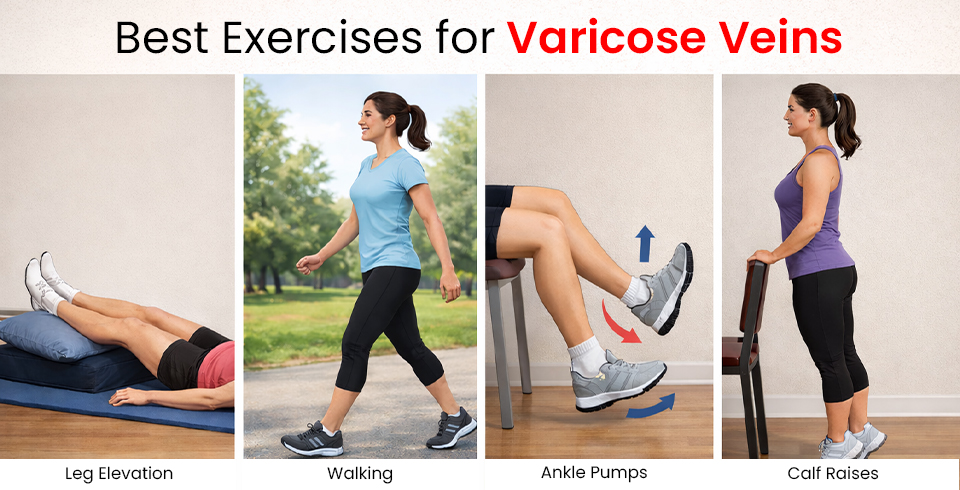
Walking is the most natural and effective way to jumpstart circulation. It is low-impact, meaning it doesn't put "jarring" pressure on the damaged valves.
How it works: Each step forces the calf muscle to contract and relax, pushing blood toward the heart.
Goal: 30 minutes of brisk walking, 5 days a week. It is widely considered the #1 among the best exercises for varicose veins.
Cycling strengthens the calves and thighs without the weight-bearing stress of running.
The "Air-Bike": If your legs feel particularly heavy or if you are experiencing painful varicose veins symptoms, lie on your back and "pedal" your legs in the air. This uses gravity to help drain the pooled blood while you build muscle.
This is the most targeted movement for the venous pump.
Routine: Stand with your feet hip-width apart. Rise onto the balls of your feet, hold for two seconds, and lower. Repeat 20 times.
Why it works: It forces the calf to work at its maximum capacity, clearing out stagnant blood in the lower leg and preventing the worsening of varicose veins symptoms.
Swimming is often recommended by specialists at any vascular hospital. The water provides a unique "compression" effect. The pressure of the water acts like a natural compression stocking, supporting the veins while you move. Plus, being horizontal in the water removes the strain of gravity entirely.
Strengthening your core and hip flexors can actually reduce the pressure in your abdominal cavity, making it easier for blood to flow upward from the legs. This is one of the best exercises for varicose veins because it combines strength with gravity-assisted drainage.
While staying active is crucial, some high-intensity workouts can actually worsen varicose veins symptoms by increasing internal pressure.
Heavy Weightlifting: "Straining" to lift heavy weights increases abdominal pressure, which acts as a "blockage" for blood trying to return from the legs. This can actually cause new varicose veins to form.
High-Impact Running: Running on hard surfaces like concrete can be jarring for damaged veins. If you must run, choose a track or grass and wear compression gear purchased from a medical supply or hospital.
Long-Hold Planks: Prolonged static pressure can temporarily hinder venous return.
Many people develop varicose veins because their jobs require them to stand in one place for hours often seen in teachers, retail workers, and even staff in a hospital setting. If you cannot leave your post, try these "micro-exercises":
The Rocker: Rock back and forth from your heels to your toes every 15 minutes.
The Desk Stretch: If sitting, extend your legs straight and flex your toes toward your shins.
Compression Support: Pair these movements with medical-grade compression stockings to give your veins an extra "squeeze" throughout the day. This is a vital way to manage varicose veins symptoms on the go.
Yoga offers "inversions" that are incredibly healing for the vascular system.
Viparita Karani (Legs-Up-the-Wall): This pose is the ultimate relief for heavy legs. By resting your legs vertically against a wall, you allow gravity to do the work for you. Many hospital physical therapy programs include this pose for venous health.
Ankle Circles: A simple but effective way to maintain joint mobility and prevent blood from "sludging" at the furthest point of your body.
Exercise is a powerful management tool, but it cannot "cure" a valve that is mechanically broken. If you find that the best exercises for varicose veins aren't providing relief, it is time to consult a vascular specialist at a reputable hospital for laser treatment.
Persistent Pain: If the aching prevents you from sleeping or walking.
Skin Ulcers: If you notice sores near your ankles that are slow to heal. These are serious varicose veins symptoms that require wound care at a hospital.
Blood Clots (Thrombophlebitis): If the vein becomes hard, red, and painful to the touch.
Heavy Bleeding: If a vein is nicked or bursts, it requires immediate hospital attention.
Today’s medical treatments are far more advanced than older methods. Most hospitals now offer minimally invasive, "walk-in, walk-out" laser treatments for those who have exhausted the best exercises for varicose veins:
Often performed in a hospital setting as a companion to laser treatment, this involves injecting a solution directly into smaller varicose or spider veins, causing them to fade over time.
This is the gold standard for treating the root cause of varicose veins without surgery. A hospital specialist inserts a tiny laser fiber into the affected vein. The laser energy generates heat, which causes the vein wall to collapse and seal shut. The body then naturally redirects blood flow to healthy veins.
Similar to laser treatment, this uses thermal energy to close off diseased veins. It is a highly effective hospital procedure with minimal downtime.
Pregnancy is one of the most common triggers for varicose veins symptoms due to increased blood volume and hormonal changes. Focus on gentle walking and prenatal yoga. Always consult your OB-GYN before starting a routine, and consider wearing compression garments early in your pregnancy to prevent permanent vein damage that might later require laser treatment at the hospital.
To maximize the effectiveness of the best exercises for varicose veins, your diet should play a supporting role.
Reduce Salt: Sodium causes water retention, which puts more pressure on your veins and worsens varicose veins symptoms.
Increase Fiber: Constipation creates internal pressure that can damage leg veins.
While you may not be able to completely erase the veins you already have through movement alone, staying active is your best defense against progression. By incorporating the best exercises for varicose veins into your daily life, you are choosing to support your "second heart" and improve your overall quality of life.
Remember, listen to your body. If your varicose veins symptoms shift from a minor nuisance to a painful limitation, don't wait. Reach out to a vascular specialist at a local hospital to discuss a personalized plan for laser treatment. Your legs carry you through the world give them the care they deserve.
While the best exercises for varicose veins significantly reduce pain and prevent new ones from forming, they cannot remove a vein that has already bulged. Only laser treatment at a hospital can permanently close and remove the visible vein.
Generally, yes, but you should stick to low-impact movements like walking or air-cycling. If the pain is sharp or accompanied by redness, visit a hospital first to rule out a clot.
Most laser treatments, like EVLT, take less than an hour. They are performed under local anesthesia, and patients can usually walk out of the hospital and return to normal activities the same day.
Absolutely. Shedding excess weight reduces the physical pressure on your leg veins, making your exercises more effective and reducing the severity of your symptoms.